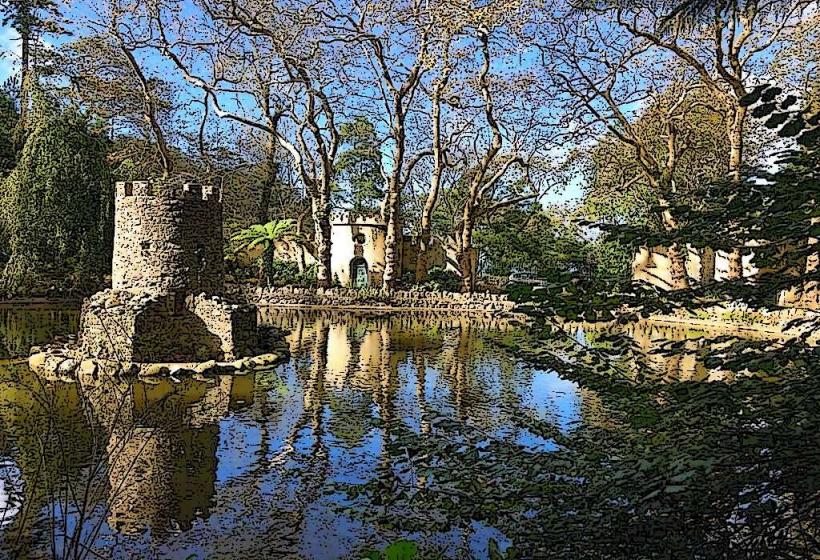
Information
Landmark: Convent of the CapuchosCity: Sintra
Country: Portugal
Continent: Europe
Convent of the Capuchos, Sintra, Portugal, Europe
Overview
Just so you know, Tucked into the Sintra Mountains, the Convent of the Capuchos-also called the Capuchin Convent of Our Lady of the Conception-stands as a centuries-aged monastic retreat in Sintra, Portugal, where moss clings to its weathered stone walls, meanwhile this cherished landmark blends faith and architecture, valued for its quiet grace, unadorned design, and the soft glow of sunlight on its stone walls.Tucked away in Sintra, this quiet little convent is a hidden gem, giving visitors a vivid gaze at the spare, stone-walled life once led by the Capuchin friars, after that number one.In 1560, Friar Baltasar da Anunciada of the Capuchin Order founded the convent, choosing the quiet, pine-scented hills of Sintra as a refuge for prayer and reflection, besides the Capuchins, a strict branch of the Franciscan order, took vows of poverty and embraced an ascetic life.At the convent, their days were spare and quiet-plain meals, humble robes, and little contact beyond the stone walls, then they devoted themselves to prayer, solitude, and penance, spending their days in tiny stone cells carved straight into the rock’s cool surface, to some extent As far as I can tell, The convent was never meant to impress with size or splendor; it was built for quiet reflection, its walls opening to the scent of pine and the sound of wind in the trees, alternatively it thrived for centuries, but by the late 1700s its spirit had begun to fade, a decline hastened when Portugal dissolved its monasteries in 1834.The convent now stands empty, much of its land sold off or turned to contemporary uses, yet the quiet still hangs in the air like mist on a cool morning, at the same time one of its most striking qualities is the way its simple design blends seamlessly into the surrounding rocks and trees, slightly The buildings were crafted to disappear into the rocky slopes, built from local granite and warm, rough-cut wood, simultaneously the friars aimed to live in step with the land, and their modest, secluded convent shows it-narrow stone corridors lead to tiny cells where each man kept his bed, a table, and little else.Workers cut these cells straight into the granite, leaving dim, tight spaces that made the friars’ vow of poverty and strict living feel almost tangible, furthermore each cell holds a plain wooden bed, a narrow table, and a bare altar, their simplicity standing in sharp contrast to the gilded halls of other Portuguese monasteries and churches.The Church of Our Lady of Conception, at the heart of the convent, is modest yet quietly gorgeous, consequently it’s built in the Franciscan style, with a narrow nave and plain wooden altars that smell faintly of wax.The church, dedicated to Our Lady of Conception, once welcomed both the friars and the modest community that gathered around the convent; its walls of cool stone and warm cork still hold the quiet of those days, not only that they lined the walls and floors of the cells with cork, a layer that kept out some of the mountain chill and the sharp scent of damp stone.They chose cork because it was practical-the area brimmed with cork oak trees, as a result around the convent, gardens unfold into winding stone paths, each turn meant to quiet the mind.Mind you, The friars wandered these paths in quiet prayer, pausing to breathe in the scent of pine, seeking both solitude and a deeper bond with the natural world, in turn the gardens hold quiet courtyards and trickling fountains, deepening the convent’s calm, while the Capuchin friars inside lived with strict simplicity and few comforts.Frankly, They lived by the Franciscan Rule, devoted to poverty, chastity, and obedience, giving up even simple comforts like a warm coat in winter, moreover each day revolved around prayer, quiet moments of meditation, and steady work, like tending the garden before sunrise.Interestingly, They spent most of their days alone and quiet, with no hint of luxury-just bare stone walls and simple wooden benches, while the convent itself was built for stillness, a locale meant for deep spiritual reflection.The plain, narrow rooms left the friars with nothing to distract them from their faith-no soft chairs, no warm fire, just bare walls and silence, in addition by blending natural materials with the quiet slopes of the Sintra mountains, the convent was designed to foster meditation, penance, and prayer; perhaps most striking is how the Convent of the Capuchos seems to disappear into the rocks and trees around it, loosely Not surprisingly, The monks carved their tiny stone cells into the hillsides, shaping each wall and doorway from the rock itself, so the buildings seemed to grow out of Sintra’s rugged hills and shadowed forests, after that the structure beautifully shows how architecture can work with nature, not against it, its stone walls and cork accents echoing the granite hills nearby.As it turns out, Built from materials gathered close at hand, the convent blends into its surroundings while keeping the project sustainable, as well as the cork kept the buildings snug in winter and pleasantly cool in summer, a smart touch that suited the monks’ plain, practical way of life.Tucked high in the Sintra Mountains, the convent feels wrapped in stillness, far from the world, after that tucked deep in the forest, the convent looks out over a wide valley where mist drifts in the morning light, making it a perfect setting for quiet prayer and reflection.The rustle of leaves and the hush of solitude must have deepened the site’s spiritual air, equally important visitors to the Convent of the Capuchos can wander through its stone cells, step inside the tiny church, and stroll the gardens that frame the quiet complex.Tucked deep in the forest, the convent’s quiet simplicity invites reflection, a stark contrast to Sintra’s grand royal palaces, simultaneously visitors can wander its peaceful gardens and follow the worn stone paths where friars once walked in prayer, to some extent The landscape around it feels lush and calm, with tall grass whispering in the breeze, inviting visitors to leisurely down and breathe in the quiet, while though the convent no longer serves its original purpose, it still carries a quiet, enduring spiritual presence.Visitors often say the venue feels steeped in calm, a hush that mirrors the quiet, contemplative life the Capuchin friars lived here for centuries; you’ll find it about 10 kilometers (6 miles) from Sintra, tucked away in the cool, pine-scented slopes of the Sintra Mountains, alternatively tucked inside the Sintra-Cascais Natural Park, it’s a quiet, out-of-the-way spot ringed by pine-scented forests and unspoiled scenery.The convent welcomes visitors all year, but it’s wise to confirm the hours in case of changes or maintenance work.
Author: Tourist Landmarks
Date: 2025-08-26